
ISRM Specialised Conference

20-23 September, 2026
Uppsala, Sweden
Time left to conference:
Day(s)
:
Hour(s)
:
Minute(s)
:
Second(s)
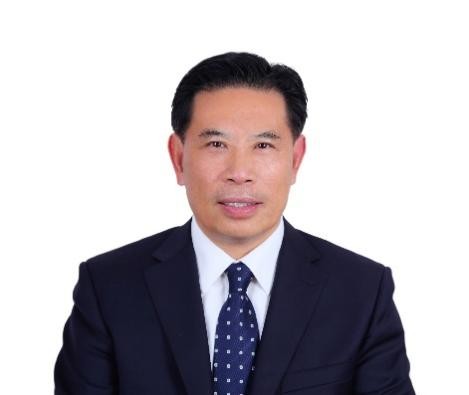
Prof. Ju Wang
Biography
Dr. Ju Wang, born in 1964, obtained his BS degree from the Nanjing University in 1984, majored in Uranium Geology and Geochemistry. He started his career in Beijing Research Institute of Uranium Geology (BRIUG) in 1987 and then held a PhD in geology from BRIUG in 1991. He served BRIUG as Chief Engineer during 2004-2008 and Vice-President during 2008-2023. He is now the Chief Scientist of China National Nuclear Corporation in the field of radioactive waste disposal, the Director of China Atomic Energy Authority’s Innovation Centre on Geological Disposal of High Level Radioactive Waste, and the Chief Designer of Beishan Underground Research Laboratory (URL) for Geological Disposal of High Level Radioactive Waste. He has been leading China’s program on geological disposal of high levels radioactive waste since 1999, including strategy development, site selection and site characterization, buffer material study, safety assessment of disposal system, design and construction of underground research laboratory. His achievements have resulted in the confirmation of Xinchang as the URL site and construction of Beishan URL, China’s first URL for geological disposal of high level radioactive waste. He is now also the President of Commission of Radioactive Waste Disposal of the International Society of Rock Mechanics and Engineering (ISRM) and the President of Commission of Underground Waste Disposal of Chinese Society for Rock Mechanics and Engineering (CSRME). He has published more 100 scientific papers in geological disposal, and uranium geology.
Introduction of the Lecture
The Beishan Laboratory: a 3rd-generation underground research laboratory for geological disposal of high-level radioactive waste
The Beishan Laboratory is China’s first underground research laboratory (URL) for high-level radioactive waste (HLW) disposal and represents a first-of-its-kind area-specific URL(a 3rd-Generation URL), different from both generic and site-specific URLs (1st and 2nd Generation URLs). An area-specific URL is characterized by that: (1) it is located at a site in the area that is considered as the potential area for a deep geological repository (DGR); (2) it has potential to be extended into a DGR; (3) it maybe excavated by low-disturbance excavation methods, such as by tunnel boring machine (TBM).
The Beishan URL consists of one spiral ramp, two experimental levels and three shafts. The spiral ramp has a total length of about 7.5 km, a cross-sectional diameter of 7.03 m, a maximum inclination of 1:10, and a minimum turning radius of 255 m. The two experimental levels are located at depths of -280 m and -560 m. The -560 m level serves as the main experimental level, where most large-scale in situ tests will be conducted, including prototype repository tests, heating tests, long-term performance tests of buffer materials, redox tests, sealing tests, tracer tests, EDZ assessment tests etc..
Construction of Beishan URL started on June 17, 2021. Excavation of the 7-km long spiral ramp has been conducted by a Tunnel Boring Machine (TBM) called“Beishan No. 1”. By December 26, 2025, the TBM-excavated ramp was successfully completed.
During construction phase of Beishan URL, a total of 24 in situ tests have been planned and are being implemented. Comprehensive site characterization has confirmed predictions from pre-excavation investigations. Systematic in situ tests have been planned for the coming 20 years in order to confirm the site suitability for future DGR and to develop disposal technologies, including full scale THMC experiments and solute transport through fracture zone. The CAEA has announced that the Beishan Laboratory is open for international collaboration, contributing an good platform for joint disposal technology development with organizations from other countries.
Contact us
Local Organising Committee of CouFrac 2026
Qinghua Lei - Local Chair
Chuanyin Jiang - Secretary General
Iman Vaezi - Secretary General
Conference Secretariat
Academic Conferences
Email: coufrac2026@akademikonferens.se
Phone: +46 18 67 14 62 or +46 18 67 10 03
Important dates
31 October 2025: Abstract submission opens
10 January 2026: Abstract submission deadline
late January 2026: Notification of Abstract Acceptance
20 April 2026: Extended Abstract Deadline
15 May 2026: Extended Abstract Acceptance
2 July 2026: Early Bird Registration Deadline (Extended)
31 August 2026: Registration Deadline (for presenters)
14 September 2026: Registration Deadline (for non-presenters)
20-23 September 2026: Conference dates