ISRM Specialised Conference

StanCon

20-23 September, 2026

Uppsala, Sweden

Time left to conference:

Day(s)

:

Hour(s)

:

Minute(s)

:

Second(s)

The Complex Systems Modelling Platform (CSMP) becomes Open Source

Stephan Matthai, Infrastructure Engineering Dept., The University of Melbourne, Grattan Street, Parkville, Victoria 3010, Australia


Sunday 20th Sep.,15:00-17:00

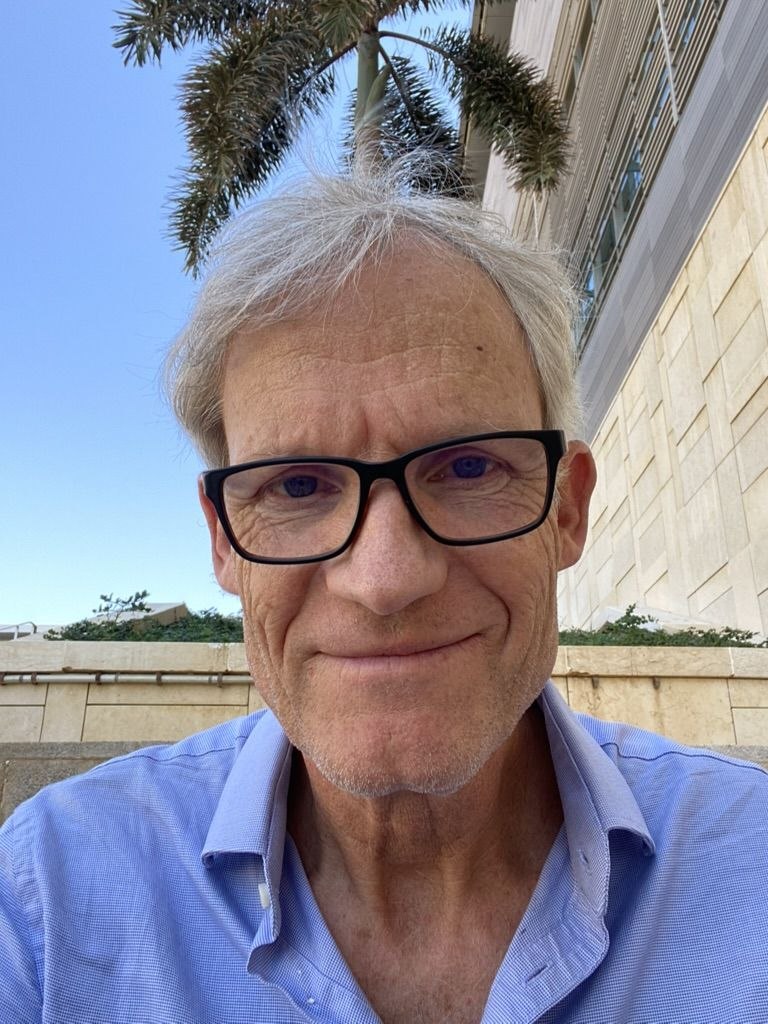
Stephan Matthai is Professor and Chair of Reservoir Engineering at the University of Melbourne, Australia, and an internationally recognised expert on subsurface (multiphase) fluid- flow processes and their computer simulation. His research interests include coupled flow-, geomechanics-, and reactive transport processes facilitated by rock fractures and faults with applications to hydrocarbon extraction, gas storage / geological CO2 sequestration, enhanced geothermal systems, nuclear waste repository safety, and hydrothermal ore deposits. On the subjects, he has taught graduate students, consulted to the industry, and has acted as advisor to government agencies and professional societies. Matthai is the Chair of the upcoming EAGE-ECMOR conference on “Mathematical modelling & simulation for sustainable subsurface energy systems” (Oslo Sept. 2-5, 2004).

In 1994, Matthai began the development of the object-oriented finite element – finite volume software known as the Complex Systems Modelling Platform (CSMP++), now OpenCSMP (L-GPL). This application programmer interface has been the enabler of >200 peer-reviewed publications in leading international journals, including 2 articles in Science and others in Nature Geoscience. OpenCSMP is developed by an international team of developers from academia and industry and underpins applications like the Australian Carbon Geo-Sequestration Simulator used in international projects like GeoCquest (geocquest.org). 
 
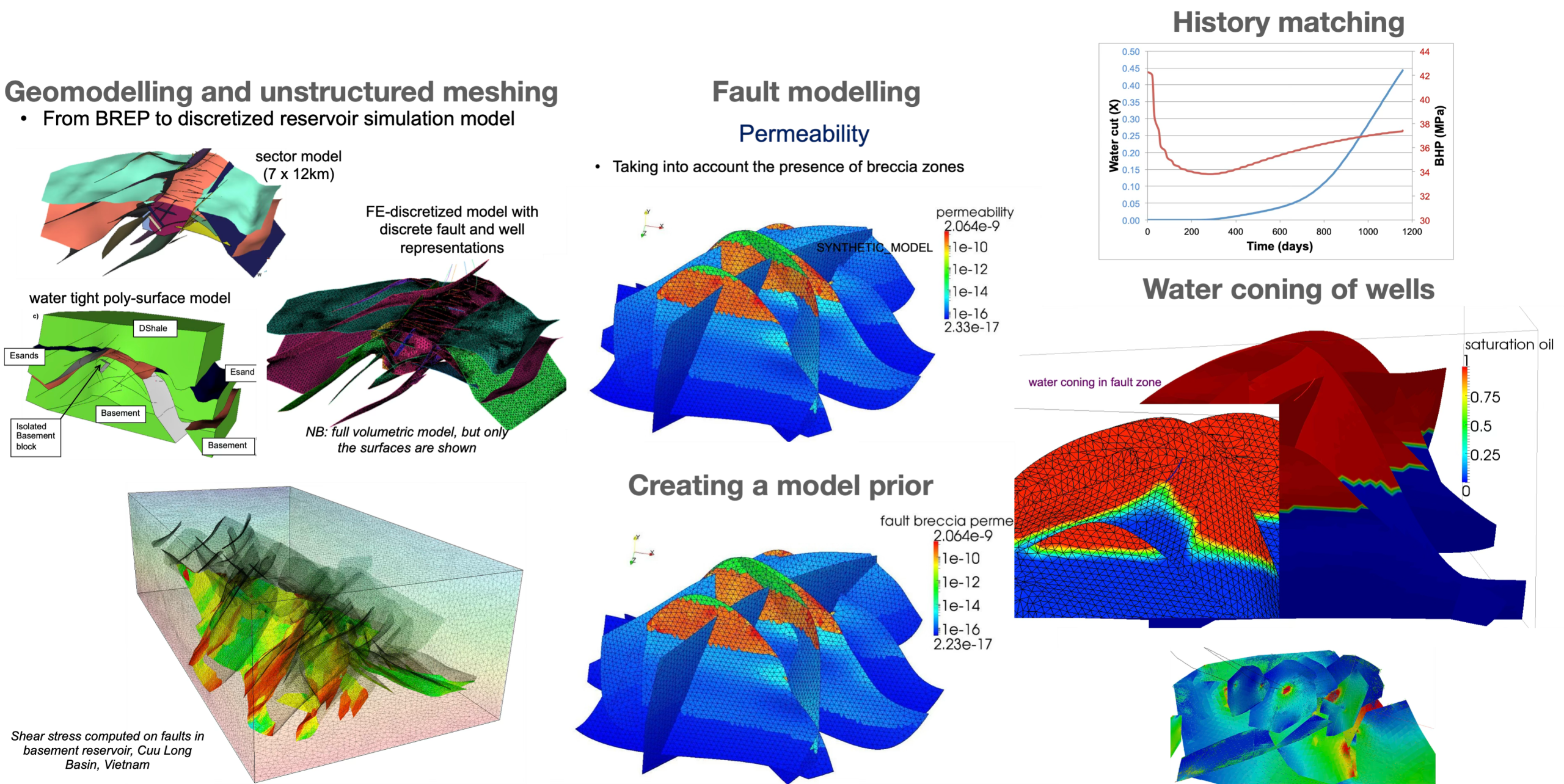
From 2000-08, as a senior lecturer at Imperial College London, Matthai led an industry consortium on the “Improved Simulation of Fractured and Faulted Reservoirs,” see Figure 1. This successful JIP was initiated in 2001 together with Martin Blunt and ran over three funding cycles until 2013. From 2009, Heriot Watt University and the Montanuniversitaet Leoben (Austria) were also part of it. This JIP was funded by international and national oil companies, including ARAMCO. Another JIP, Matthai was instrumentally involved in was ExxonMobil’s “Fundamental Controls on Flow in Carbonates” (FC)2.
 
Matthai has also been involved extensively in university teaching, course and curriculum design. At Imperial he designed and implemented the new MSc degree “Computational Geoscience,” and in Leoben, he redesigned and delivered the Reservoir Engineering component of the International Master’s program in Petroleum Engineering. Simultaneously, he served on steering committees for the SPE/EAGE/ECMOR and provided advice to government and private sector stakeholders worldwide. At Melbourne University, he is teaching an undergraduate course on “Sustainable Infrastructure Engineering” and an MEng graduate course on “Computational Geotechnical Engineering.”
 
During his career, Matthai held positions like a Governors’ Lectureship at Imperial College London, a professor- and directorship of the (Petroleum) Reservoir Engineering Institute at Leoben, and postdoctoral positions at Cornell University, Stanford University, and a research fellowship at the ETH Zürich, Switzerland. Matthai earned his PhD from the Research School of Earth Sciences at the Australian National University, Canberra. 

Abstract

Multi-physics simulation of complex geologic systems needs to express dynamic behaviours manifesting as plumes, convection cells and-or fracturing and faulting. The “playing field” is the geomodel. Instabilities emerge across multiple length scales and create unique complex patterns and intricate statistical distributions. The Complex Systems Modelling Platform (CSMP++) employs a space-time adaptive collocated finite element – finite volume discretization of geomodel to simulate such subsurface behaviour, with a focus on geo-energy systems. The current code application programmer interface uses policy-based class design, and elements, nodes and other data structures implemented as class templates. This discretisation amounts to arrays of structures and polymorphic classes as opposed to structures of arrays common in procedural finite element codes. This represents a trade-off between versatility and data-driven approaches that the team of developers has settled on in view of their needs for THMC simulation of geo-energy systems.

In this workshop, I will introduce CSMP with code and application examples also reviewing its journey alongside that of C++, discussing its pros and cons and why it is strong alternative to other simulation tools for coupled geologic processes. I will also address why the current ETHZ – Heriot Watt – Melbourne – Berlin team changed from a closed code – open community to an open-source model, with a central public github site that will be powered up in a boot camp before the end of this year. And I will try to convince you to join this effort!

In 2026, CSMP underpins multiple simulators, integrating functionality that has enabled computational geoscience research published in 250 peer-reviewed journal articles, including Science and Nature Geoscience.
CSMP Abstract

Contact us

Local Organising Committee of CouFrac 2026
Qinghua Lei - Local Chair
Chuanyin Jiang - Secretary General
Iman Vaezi  - Secretary General

Conference Secretariat
Academic Conferences
Email: coufrac2026@akademikonferens.se
Phone: +46 18 67 14 62 or +46 18 67 10 03
"AkademiKonferens"

Important dates

31 October 2025: Abstract submission opens
10 January 2026: Abstract submission deadline
late January 2026: Notification of Abstract Acceptance
20 April 2026: Extended Abstract Deadline
15 May 2026: Extended Abstract Acceptance
2 July 2026: Early Bird Registration Deadline (Extended)
14 September 2026: Registration Deadline
20-23 September 2026: Conference dates