
ISRM Specialised Conference

20-23 September, 2026
Uppsala, Sweden
Time left to conference:
Day(s)
:
Hour(s)
:
Minute(s)
:
Second(s)
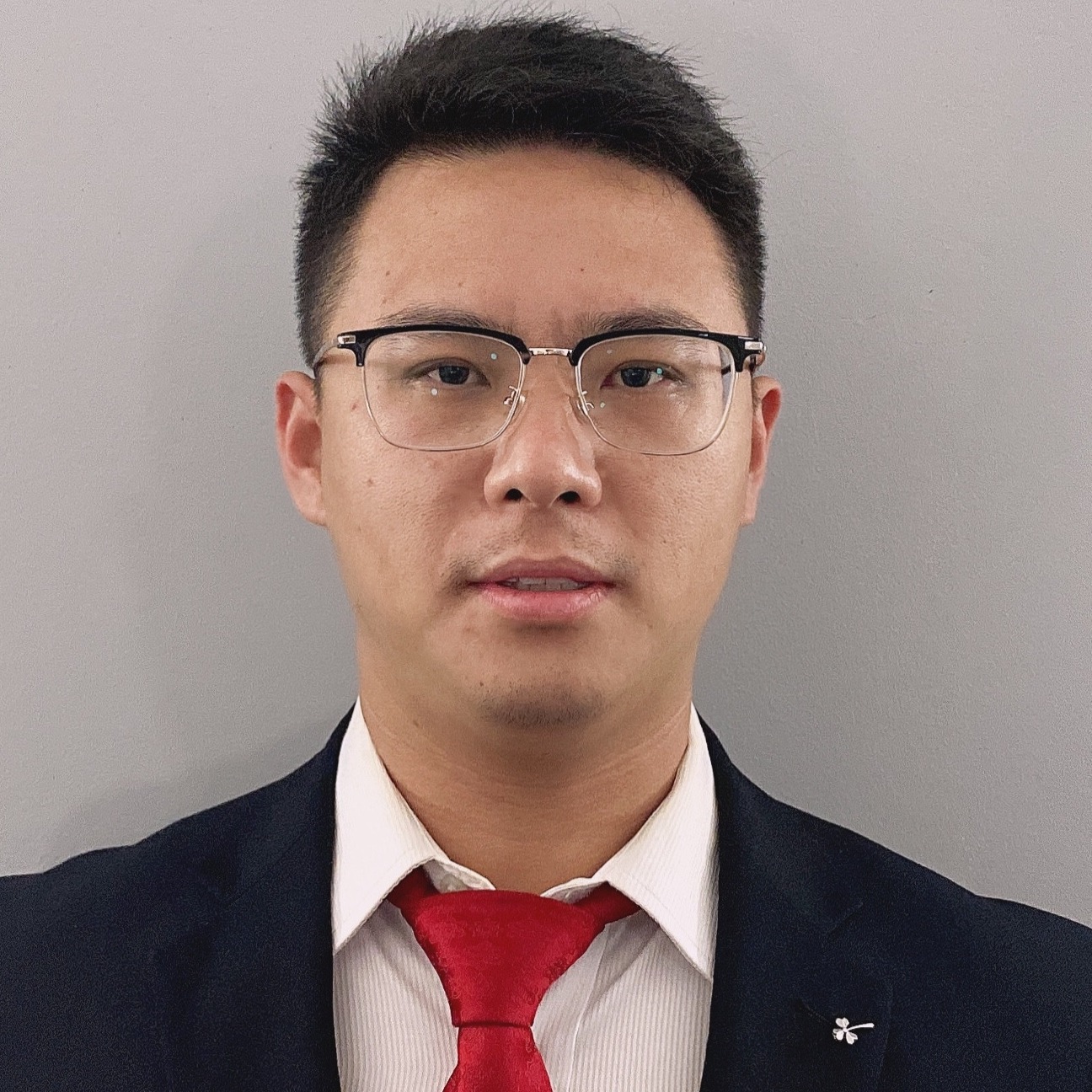
Dr. Junlong Shang
Biography
Dr Junlong Shang is a Senior Lecturer (Associate Professor, permanent) in Rock Mechanics in the Department of Civil Engineering and Management at The University of Manchester. He also serves as Head of Postgraduate Research for the Department. He holds a BEng and an MEng in Mining Engineering from Central South University, and a PhD in Earth Sciences from the University of Leeds.
Prior to joining The University of Manchester in 2024, he held positions at Nanyang Technological University (NTU), Singapore, and the University of Glasgow.
At Manchester, he leads the Rock Mechanics and Geomechanics (RMGE) team whose mission is to advance the understanding of how rocks and fractures behave under complex subsurface conditions. Using a combination of laboratory experiments, computational modelling, and artificial intelligence (AI), the team investigates fractures across various scales—from microcracks to major faults—and how they control permeability, reactivation, and stability. The team’s work on coupled thermal, hydraulic, mechanical, and chemical processes supports safe and sustainable low-carbon subsurface technologies, including geothermal energy extraction, underground energy storage, radioactive waste disposal, and carbon sequestration. Recently, Dr Shang has developed an interest in active control of subsurface fractures, which has many implications for low-carbon subsurface technologies.
Introduction of the Lecture
Heterogeneity of Rock Fractures and Its Implications for Low-Carbon Subsurface Applications
The transition to low-carbon energy systems increasingly depends on the safe and reliable use of the subsurface, including applications such as geothermal energy extraction, energy storage, and nuclear waste disposal. At the heart of these applications lie rock fractures, which govern fluid flow, stability, and system integrity. Yet, natural fractures are inherently heterogeneous, exhibiting complex variability in geometry, composition, and behaviour across scales. This complexity is often oversimplified in engineering practice, limiting our ability to predict performance and manage risk.
This talk explores fracture heterogeneity from three interconnected perspectives: geometry and persistence, material and mineralogical controls, and hydro-mechanical interactions. By integrating insights from field observations, laboratory experiments, innovative characterisation techniques, and numerical modelling, it demonstrates how fracture heterogeneity fundamentally shapes connectivity, controls deformation and failure, and governs fluid-driven processes such as fault reactivation and induced seismicity. A central message is that heterogeneity is not a secondary detail, but a defining feature of subsurface systems. Its influence extends from grain-scale processes to reservoir-scale responses, with direct implications for system safety and long-term performance. Recognising and characterising this complexity is therefore essential for the responsible deployment of low-carbon subsurface technologies.
By bringing together multi-scale evidence and approaches, this work contributes towards a more realistic and predictive understanding of fractured geological systems. Looking ahead, advancing this field will require closer integration of data, modelling, and monitoring to better capture and manage the inherent complexity of the subsurface.
Contact us
Local Organising Committee of CouFrac 2026
Qinghua Lei - Local Chair
Chuanyin Jiang - Secretary General
Iman Vaezi - Secretary General
Conference Secretariat
Academic Conferences
Email: coufrac2026@akademikonferens.se
Phone: +46 18 67 14 62 or +46 18 67 10 03
Important dates
31 October 2025: Abstract submission opens
10 January 2026: Abstract submission deadline
late January 2026: Notification of Abstract Acceptance
20 April 2026: Extended Abstract Deadline
15 May 2026: Extended Abstract Acceptance
2 July 2026: Early Bird Registration Deadline (Extended)
31 August 2026: Registration Deadline (for presenters)
14 September 2026: Registration Deadline (for non-presenters)
20-23 September 2026: Conference dates