
ISRM Specialised Conference

20-23 September, 2026
Uppsala, Sweden
Time left to conference:
Day(s)
:
Hour(s)
:
Minute(s)
:
Second(s)
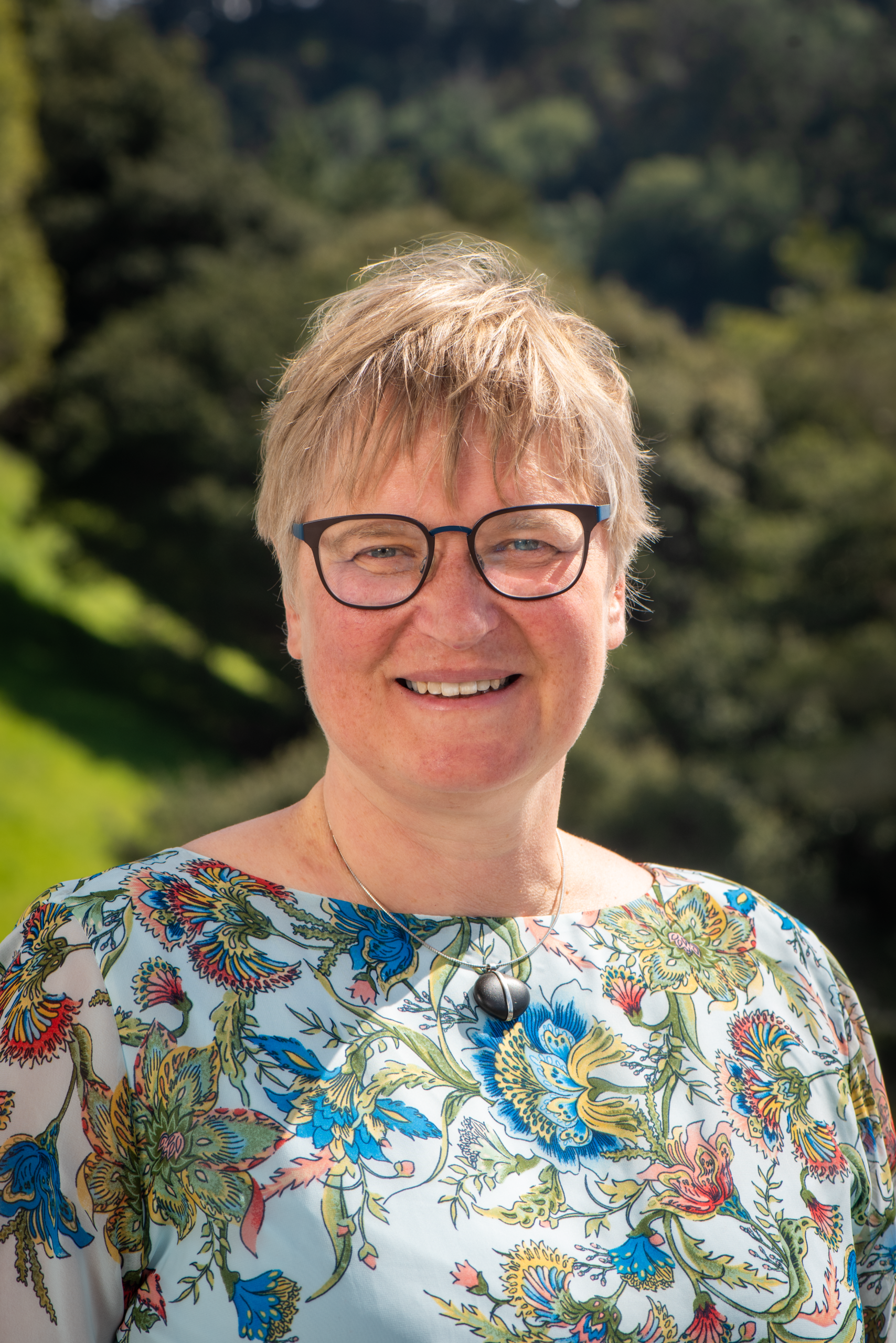
Dr. Eva Schill
Biography
Eva Schill is a Staff Scientist in the Geophysics Department of Berkeley Lab’s Earth and Environmental Sciences Area (EESA) where she serves as the Lead of the Geothermal Systems Program of the Energy and Geoscience Division. At the Technical University of Darmstadt, Germany, Dr. Schill is Professor for Geophysics in Reservoir Systems. She obtained her Ph.D. from the Eberhard Karls University in Tübingen in Germany. After her postdoctoral research at ETH Zürich, Switzerland and Johannes Gutenberg University Mainz, Germany, where she was appointed first Junior Professor for Geothermics. After serving as Professor for Geothermics at the University of Neuchâtel, Switzerland, she was a leading scientist at the Karlsruhe Institute of Technology, Germany, before joining LBNL.
Dr. Schil is a geologist and geophysicist and deals with geothermal issues from exploration to reservoir behavior. She combines various geological and geophysical methods to understand the structure of the subsurface. In combination with hydromechanical experiments, Dr. Schill is developing new monitoring methods that go beyond the monitoring of induced seismicity and shed light on reservoir processes. She is also working on new technologies to mitigate induced seismicity.
Introduction of the Lecture
Unlocking Earth’s Deep Heat: Coupled THMC Processes in Enhanced Geothermal Systems
Enhanced Geothermal Systems (EGS) can unlock vast geothermal resources across the United States and worldwide, providing secure and partly dispatchable electricity. Their successful development, however, depends on understanding tightly coupled thermo-hydro-mechanical-chemical (THMC) processes that govern reservoir creation, performance, and long-term sustainability.
Fluid injection alters pressure and temperature, changes the subsurface stress state, activates fractures, and induces seismicity. At the same time, fluid–rock reactions can dissolve or precipitate minerals, modifying fracture apertures, permeability, flow pathways, and heat-transfer efficiency. These feedbacks become increasingly important in superhot-rock systems at temperatures above 400°C, where extreme conditions create both major opportunities and new scientific and technological challenges.
Research supported by the U.S. Department of Energy’s Office of Geothermal has advanced the experimental, computational, and monitoring capabilities needed to characterize these coupled processes. Lawrence Berkeley National Laboratory has contributed through THMC modeling, reactive transport simulation, induced-seismicity analysis, geophysical monitoring, and studies of high-temperature water–rock interactions.
Field demonstrations at EGS Collab and Utah FORGE are now integrating these capabilities at reservoir scale. This keynote will highlight recent scientific advances and discuss how predictive THMC understanding can enable safer stimulation, sustained permeability, effective heat extraction, and commercially viable next-generation EGS deployment.
Contact us
Local Organising Committee of CouFrac 2026
Qinghua Lei - Local Chair
Chuanyin Jiang - Secretary General
Iman Vaezi - Secretary General
Conference Secretariat
Academic Conferences
Email: coufrac2026@akademikonferens.se
Phone: +46 18 67 14 62 or +46 18 67 10 03
Important dates
31 October 2025: Abstract submission opens
10 January 2026: Abstract submission deadline
late January 2026: Notification of Abstract Acceptance
20 April 2026: Extended Abstract Deadline
15 May 2026: Extended Abstract Acceptance
2 July 2026: Early Bird Registration Deadline (Extended)
31 August 2026: Registration Deadline (for presenters)
14 September 2026: Registration Deadline (for non-presenters)
20-23 September 2026: Conference dates